
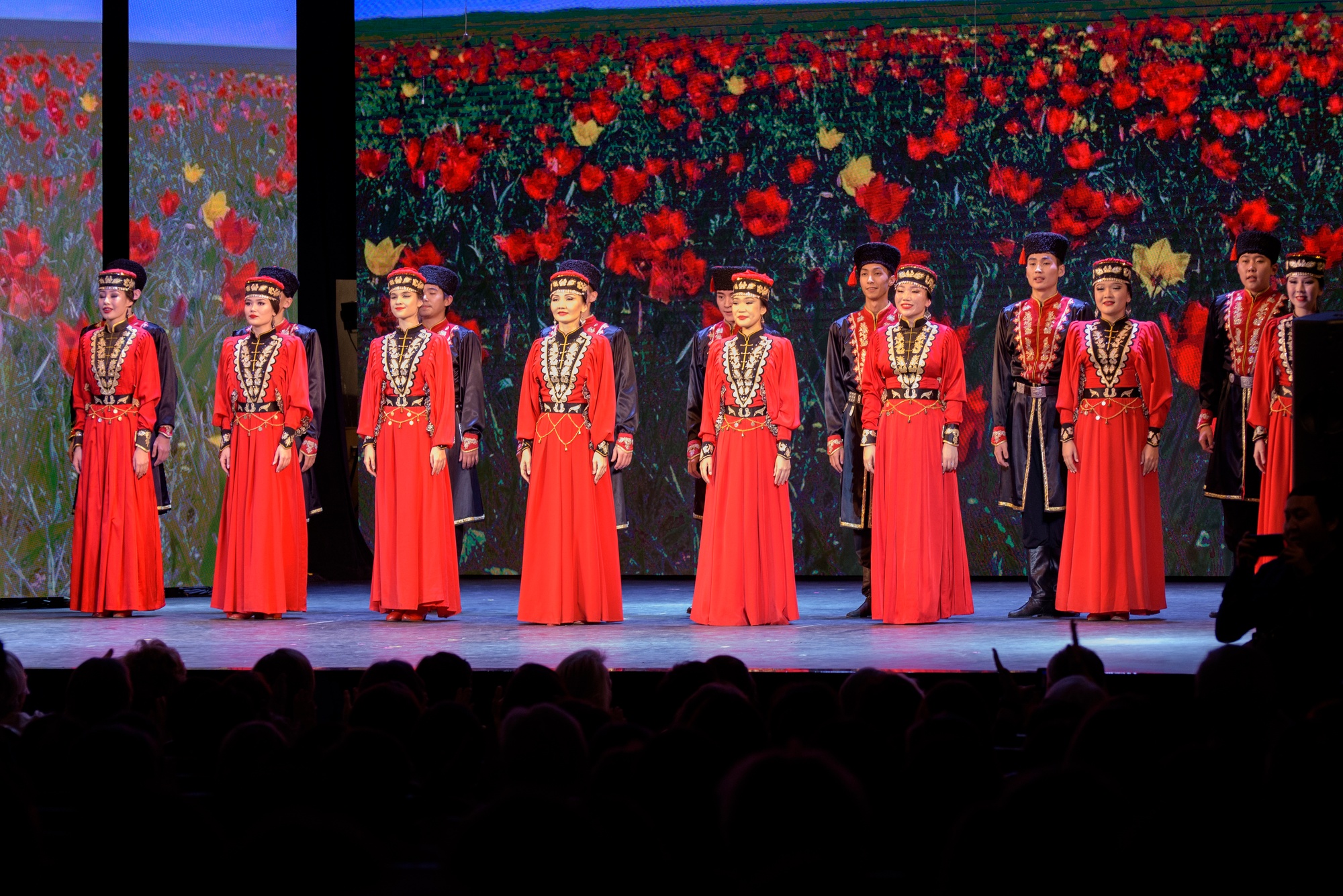
The Kalmykia State Dance Theatre “Oiraty” has become a popular and beloved creative ensemble in a short time. When its concerts are held, the audience feels a sense of celebration, and the actors feel spirituality and inspiration, giving their all not only “with full foot,” but also with their whole soul. This symbiosis, which yields an excellent creative result, allows us to speak of “Oiraty” as a phenomenon of art in general. In the post‑Siberian history of Kalmykia, when cultural issues were relegated to the background, we did not experience many events that could be classified as artistic phenomena.
The State Dance Theatre of Kalmykia “Oiraty” made its presence felt right away — brightly, freshly, and originaly. Its entire phenomenon lies in its lightness and simplicity. The artists’ outstanding physical and visual attributes — each of them could adorn the cover of any luxurious Tokyo or Parisian magazine — are imbued with the charm of youth, and in some cases even with childlike spontaneity; their creative zeal and stage culture reveal to us a perfectly coordinated, brilliant symbiosis of talents.
The Oirat Dance Theatre was founded in January 1990 as an independent professional creative collective, bringing together artists from various ensembles, including amateur performance groups, and graduates of choreographic schools.
Pyotr Nadbitov is the founder and leader of “Oirats,” and his role is not only artistic but also spiritual. Today, in the person of Nadbitov, Kalmykia has a well‑known ballet master in the republic and in Russia. He is a master of philosophical dance. The score of his productions contains not only spectacle, regality, and an elusive Eastern charm, but also deep meaning.
The repertoire of the “Oirats” dance theatre is truly a treasure trove of dance art. In addition to the classic repertoire, which includes dances that have become favorites with the audience, such as “Chicherdyk,” “Ishkimdyk,” “Derbetovsky Tavshur,” and “Damzhg,” the concert program also features new productions that stand out not only for their original and graphically stunning interpretation but also for their experimental approach to understanding the aesthetics of Kalmyk dance in general. It is enough to recall such productions as “Worship of the Sun,” “Spring Games,” “Heels,” the Kyrgyz Kalmyk dance “The Lame Raven,” and “The Peacock Dance.” The revival of early works by Nadbit, in particular “The Dance of the Heroes,” “The Dance of the Hare,” and so on, has only enriched the repertoire of “Oirat.” The performers also enjoy performing dances of the peoples of the world.
Kalmyk dance art is the little that we have managed to preserve from the cultural heritage of our nation, which has been shaped over its centuries‑long history. Dance art is a source of legitimate pride for every Kalmyk. In these challenging times, meeting a group like “Oirats” allows us to feel what people call the “call of the ancestors,” to experience the unique surge of joy from coming into contact with something painfully close, dear, and сокровенное. And if ever it is possible to reach the hearts of Kalmyks who do not want to know who they are, it will probably happen thanks to the charm of the Kalmyk dance and those who perform it, devoting a large part of their lives to it.
“The culture of the people is the nation’s wealth; the Oirat Dance Theatre is a national treasure.”